
Best Answer:
Below are some common approaches to speech therapy for people with hypernasality:
- Altering Tongue Placement. By adjusting the location of your tongue, your speech therapist can help you fix your airflow.
- Biofeedback.
- Oral Vs Nasal Production.
- Volume & Pitch Control.
- Auditory Feedback.
FAQ
What causes hypernasality in children?
Hypernasality is due to an abnormal opening between the nose and the mouth during speech. This is usually due to a form of velopharyngeal dysfunction (velopharyngeal insufficiency or velopharyngeal incompetence). Common causes include a history of cleft palate or submucous cleft palate.
Can hypernasality be cured?
While many cases of hypernasality are curable through physical therapy services and surgical means, speech therapy is the easiest in assisting a child to speak clearly and efficiently. Not all children will be able to cure their hypernasality and must focus on speech therapy.
How do you treat hypernasality in children?
Feedback for hypernasality or nasal emission:
Ask the child to try to reduce or eliminate the sound coming through the tube as he produces oral sounds and then words with oral sounds. Have the child alternately pinch and open his nose during production of the sound.
Why does my child’s nose always sound blocked?
Allergic Rhinitis
Nasal allergies are the most common cause of stuffy noses. For children with nasal allergies, harmless substances like pollen and pet dander kick off an inflammatory immune response that makes the body behave like it has a constant, mild cold.
Is hypernasality a symptom of dysarthria?
Characteristics Of Dysarthria in Communication
Intelligibility varies greatly depending on the extent of neurological damage. Hypernasality is frequently present as are problems with respiration, phonation and resonance.
What are the symptoms of hypernasality?
hypernasality (“nasal sounding” speech) speech sound errors. nasal air emissions (air leaking through the nose during speech) weak pressure on some speech sounds.
Can nasal speech be cured?
Treatment may include surgery to repair the palatal abnormality and to help direct sound and air away from the nose and back into the mouth during speech, and in some cases, speech therapy to target articulation skills.
What sounds would you use to test for hypernasality?
Using voiced (resonating) sounds, assess for the following: Hypernasality-excessive nasal resonance on vowels and voiced oral consonants. Hyponasality-too little or absent resonance on nasal consonants and adjacent vowels, especially /i/ and /u/.
Is hypernasality a speech disorder?
Hypernasal speech is a disorder that causes abnormal resonance in a human’s voice due to increased airflow through the nose during speech. It is caused by an open nasal cavity resulting from an incomplete closure of the soft palate and/or velopharyngeal sphincter.
What are the reasons for hyponasal speech?
If hyponasality exists, it means there is either overclosure of the velopharyngeal port, or there is an obstruction in the nose. There are three main causes of velopharyngeal dysfunction-structural problems, neurological problems, and mislearning.
What causes hypernasal voice?
Hypernasal speech may result from unrepaired cleft palates, significant oronasal fistulae, or velopharyngeal incompetence (VPI). VPI results from poor function of the levator veli palatini, from the inadequate repair or tethering of the palate, or from a deep posterior pharyngeal wall with a relatively short palate.
How is Hypernasal treated?
The most common surgery utilized is the pharyngeal flap, where a segment of the posterior pharyngeal musculature (or back of the throat wall) is rotated and inset into the back part of the soft palate. This helps to physically plug the gap and decrease nasal emissions.
What causes hypernasality in dysarthria?
HYPERNASALITY refers to the perception of excessive nasal resonance in speech, caused by velopharyngeal dysfunction (VPD), an inability to achieve proper closure of the velum, the soft palate regulating airflow between the oral and nasal cavities.
What are the two most common speech sound disorders?
Speech sound problems include articulation disorder and phonological process disorder.
- Articulation disorder is a problem with making certain sounds, such as “sh.”
- Phonological process disorder is a pattern of sound mistakes. This includes not pronouncing certain letters.
Can nasal congestion cause speech problems?
When allergies block the sinuses and agitate the throat, it can make sounds such as nasal consonants found in words like ‘nose’ and ‘mouth’ impossible to pronounce. Over time, if allergies continue, these speech troubles can become a habit even when allergy congestion isn’t causing mouth breathing.
Can a deviated septum cause hypernasality?
Read more about large adenoids here. Other common anatomic causes of hyponasal speech include deviated septum, turbinate hypertrophy, and allergies. Often these issues along with large adenoids cause a “snotty” nose in kids.
How do I stop sounding nasally?
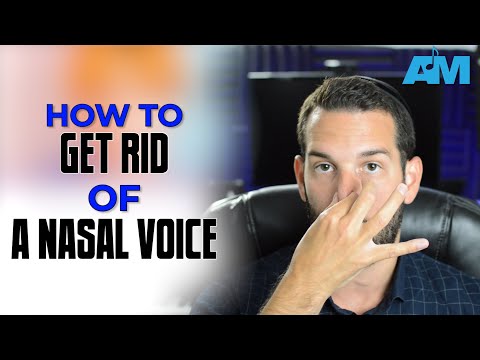
What is the open mouth approach for hypernasality?
Open Mouth: Have the child speak with his mouth more open. Change Volume: Try different volumes to see which has less nasality. Change Pitch: Try different pitches to see which has less nasality. Auditory Feedback: Teach the child to hear the difference between nasal and oral resonance in himself and others.
What is an example of hypernasal speech?
Hypernasal speech is the sound of speech that results from too much air escaping through the nose while talking. There are certain letters and sounds that should not have air escaping through the nose during speech. Examples of these are vowels, or letters like “s”, “b”, and “k”.
Does hypernasality affect intelligibility?
Hypernasality can negatively impact listeners’ ability to distinguish between oral and nasal consonants produced in the same place of articulation, thus reducing intelligibility (Kent et al., 1989).
Can enlarged adenoids cause nasal speech?
Large adenoids affect the sound of a child’s voice. The nasal passageway is an important part of the process of creating sound. When the nasal passages are blocked by increased adenoids, it is like talking with a stuffed nose. Pitch, tone and articulation can all be negatively impacted by swollen adenoids.
What is verbal apraxia of speech?
Apraxia of speech (AOS)-also known as acquired apraxia of speech, verbal apraxia, or childhood apraxia of speech (CAS) when diagnosed in children-is a speech sound disorder. Someone with AOS has trouble saying what he or she wants to say correctly and consistently.
Does septoplasty fix nasally voice?
Septum surgery is done to straighten the septum in the nose to allow better airflow through the nose. Septoplasty will not worsen, and often can improve the voice. Most often, the voice remains unchanged.
Can adenoids affect speech in toddlers?
Adenoid hypertrophy is a physical alteration that may affect speech, and a speech disorder can have other negative effects on a child’s life. Airway obstruction leads to constricted oral breathing and causes postural alterations of several oro-facial structures, including the mouth, tongue, and hyoid bone.
How do you reset nasal passages?
How to Clear a Stuffy Nose
- Avoid common irritants. Cold sufferers should avoid irritants such as smoke and strong perfumes.
- Drink water. Staying hydrated while treating a cold can help keep mucus thin and drain.
- Take a decongestant.
- Take a hot hot shower.
- Use a humidifier.
- Relax with a warm compress.
What causes mixed nasality?
Mixed nasality occurs when there is a combination of both hypernasality and hyponasality, such as in the case of hypernasality due to VPD and also enlarged adenoids.
What are some speech therapy techniques?
Speech therapy techniques for adults
- Tongue exercises. Stick your tongue out, hold for two seconds, then bring it back in.
- Smiling. Simply smiling in front of a mirror can help improve motor skills.
- Puckering your lips. Try puckering your lips, then relaxing.
- Reading out loud.
- Playing word games.
What are the four major speech disorders?
Symptoms and Causes
- Autism Spectrum Disorder (ASD). People with ASD have trouble with social interactions and with interpreting and using non-verbal and verbal communication.
- Dyslexia. This is a common learning disability that makes it difficult for people to read.
- Cerebral palsy.
- Hearing loss.
Does a cleft palate cause hypernasality?
Hypernasality frequently occurs in children with cleft palate due to excessive nasal resonance perceived during the speech because the oral cavity is not properly separated from the nasal cavity.
Where is hypernasal voice seen?
Hypernasality-occurs when there is sound energy in the nasal cavity during production of voiced, oral sounds. Hyponasality-occurs when there is not enough nasal resonance on nasal sounds due to a blockage in the nasopharynx or nasal cavity.
What foods should be avoided with adenoids?
Diet for Enlarged Adenoids In Ayurveda
Avoid acidic drinks such as citrus juices and buttermilk. Do not eat junk food such as oil, spicy or fried. Due to enlarged adenoids, it becomes difficult to swallow food. In such cases, eat boiled vegetables, scrambled eggs, baked fruits or mashed potatoes.
How do I know if my child needs adenoids removed?
How Can I Tell if My Child Needs His Adenoids Removed? If your child experiences recurrent nasal infections, difficulty breathing through the nose, obstructive sleep apnea, snoring or mouth breathing, a doctor may recommend a pediatric adenoidectomy, which is a surgery performed on children to remove their adenoids.
What is hyponasal vs hypernasal?
Hyponasal speech is when there is an abnormally reduced nasal airflow during speech often in a setting of nasal obstruction or congestion. Hypernasal speech is when there is the presence of an abnormally increased nasal airflow during speech.
How do you check a child’s adenoids?
The adenoids cannot be seen by looking in the mouth directly. The health care provider can see them by using a special mirror in the mouth or by inserting a flexible tube (called an endoscope) placed through the nose. Tests may include: X-ray of the throat or neck.
Do humidifiers help with blocked nose?
Using a humidifier in the home can help relieve a stuffy nose and can help break up mucus so you can cough it up. Humidified air can relieve the discomfort of colds and the flu.
What part of the brain is damaged in dysarthria?
Hyperkinetic dysarthria occurs as a result of damage to parts of the brain that doctors refer to collectively as the basal ganglia. The basal ganglia play a role in various functions, including involuntary muscle movement.
What part of the brain lobe is damaged in dysarthria?
Dysarthria may be caused by damage to the following: Parts of the brain that control muscle movement. Cerebellum.
What type of brain damage causes dysarthria?
Acquired dysarthria happens as a result of brain damage later in life. For example, a stroke, a brain tumor or Parkinson’s disease can result in dysarthria.
What is nasal dysarthria?
difficulty controlling the volume of your voice, making you talk too loudly or quietly. a change in your voice, making it nasal, strained or monotone.
How do you teach diaphragmatic breathing speech therapy?
For example: Inhale to a count of 4, exhale to a count of 5. Then work towards inhaling for 5 seconds, and exhaling for 6 seconds. Complete this 10 times, three times per day. After 10 breaths, inhale through the nose and exhale making an easy “S” sound.
What causes hyponasal voice?
Hyponasal speech, denasalization or rhinolalia clausa is a lack of appropriate nasal airflow during speech, such as when a person has nasal congestion. Some causes of hyponasal speech are adenoid hypertrophy, allergic rhinitis, deviated septum, sinusitis, myasthenia gravis and turbinate hypertrophy.
Is hypernasality a speech disorder?
Hypernasal speech is a disorder that causes abnormal resonance in a human’s voice due to increased airflow through the nose during speech. It is caused by an open nasal cavity resulting from an incomplete closure of the soft palate and/or velopharyngeal sphincter.
How do you teach nose sounds?
You should have your students pinch their nose and try to make the sound. Ah, you cannot produce the sound when the nose is blocked because the air is coming out of our nose. This is why we call m a nasal sound. I refer to this as our front nasal because the sound is being produced at the front of our mouth.
How do you teach your nose sound speech therapy?
Start with having the client EXPERIENCING vowels and nasals (listen to V’s & nasals). Help him discover that vowels come out the mouth while nasals come out the nose. Say, “That sound is coming out your nose.” And “That sound is coming out your mouth.” Help the client learn to DIFFERENTIALLY CONTROL vowels and nasals.
Can hypernasality be cured?
While many cases of hypernasality are curable through physical therapy services and surgical means, speech therapy is the easiest in assisting a child to speak clearly and efficiently. Not all children will be able to cure their hypernasality and must focus on speech therapy.
How can I help my Hypernasal speech?
If there is hypernasality or nasal emission, it will be heard loudly through the tube. Ask the child to try to reduce or eliminate the sound coming through the tube as he produces oral sounds and then words with oral sounds. Have the child alternately pinch and open his nose during production of the sound.
How do you treat a hypernasal speech?
Below are some common approaches to speech therapy for people with hypernasality:
- Altering Tongue Placement. By adjusting the location of your tongue, your speech therapist can help you fix your airflow.
- Biofeedback.
- Oral Vs Nasal Production.
- Volume & Pitch Control.
- Auditory Feedback.
Should I get my child’s adenoids removed?
If enlarged adenoids are causing breathing issues, problems swallowing, or recurrent ear infections, removing them may be the best option. The surgery is safe and effective for most children.
Why does my child sound nasally when talking?
The most common reason for this type of speech is enlarged ADENOIDS that block the air passage to the nose and can be corrected with ADENOIDECTOMY. Hypernasal speech is the sound of speech that results from too much air escaping through the nose while talking.
At what age should I be concerned about my child speech?
Also call the doctor if your child’s speech is harder to understand than expected for their age: Parents and regular caregivers should understand about 50% of a child’s speech at 2 years and 75% of it at 3 years. By 4 years old, a child should be mostly understood, even by people who don’t know the child.
What are the symptoms of hypernasality?
hypernasality (“nasal sounding” speech) speech sound errors. nasal air emissions (air leaking through the nose during speech) weak pressure on some speech sounds.
Why does my 4 year old sound nasally when talking?
Nasal speech (hypernasality) and nasal air emission (air escaping down the nose when talking) happen when the back of the soft palate (roof of the mouth) does not fully close against the upper walls of the throat (pharynx) during speech, leaving the nasal cavity open.
What causes hypernasal voice?
Hypernasal speech may result from unrepaired cleft palates, significant oronasal fistulae, or velopharyngeal incompetence (VPI). VPI results from poor function of the levator veli palatini, from the inadequate repair or tethering of the palate, or from a deep posterior pharyngeal wall with a relatively short palate.
How do you get rid of a hyponasal voice?
How is a nasal voice treated?
- tonsils or adenoids removal.
- septoplasty for a deviated septum.
- endoscopic surgery to remove nasal polyps.
- Furlow palatoplasty and sphincter pharyngoplasty to lengthen a short soft palate.
- corrective surgery for cleft palate in babies around 12 months of age.
Is nasal congestion a stuffy nose?
Nasal congestion or “stuffy nose” occurs when nasal and adjacent tissues and blood vessels become swollen with excess fluid, causing a “stuffy” plugged feeling. Nasal congestion may or may not include a nasal discharge or “runny nose.” Nasal congestion usually is just an annoyance for older children and adults.
How to get rid of nasally voice reddit?
try to eliminate any feeling of vibration from your nose (the bone around should vibrate however, that’s your “mask”. a good way to remove this nasality is to try talking like you have a cold. You’ll notice, if you do it right, that the nasality is gone. Then, using that same space, sing.
What does Nasally voice mean?
If someone speaks nasally, their voice has a particular sound because air is going through the nose when they speak: Mr. Smith droned on nasally. He plays the character with a high-pitched, nasally projected voice. See.
How long does it take for speech therapy to work?
However, regardless of the complexity of the issue, your SLP should set goals that are achievable within a reasonable amount of time (6 months or less). That is, within 6 months of initiating therapy, it is reasonable to expect measurable progress.
Do speech sound disorders go away?
Milder forms of this disorder may go away on their own by around age 6. Speech therapy may help more severe symptoms or speech problems that don’t get better. Therapy may help the child create the sound.